
)
)
Inside CBRE’s field service transformation: 10% more wrench time, 43% less driving
The world’s largest facilities management firm replaced manual dispatch with AI optimization. The numbers, and the lessons, are now public.
Ask any installer what consumes their day, and the answer rarely surprises. Traffic, last-minute reroutes, the wrong job sheet, and a depot that’s 20 minutes in the wrong direction. For
maintenance contractors operating at scale, that lost time is multiplied across thousands of technicians and tens of thousands of jobs every week.
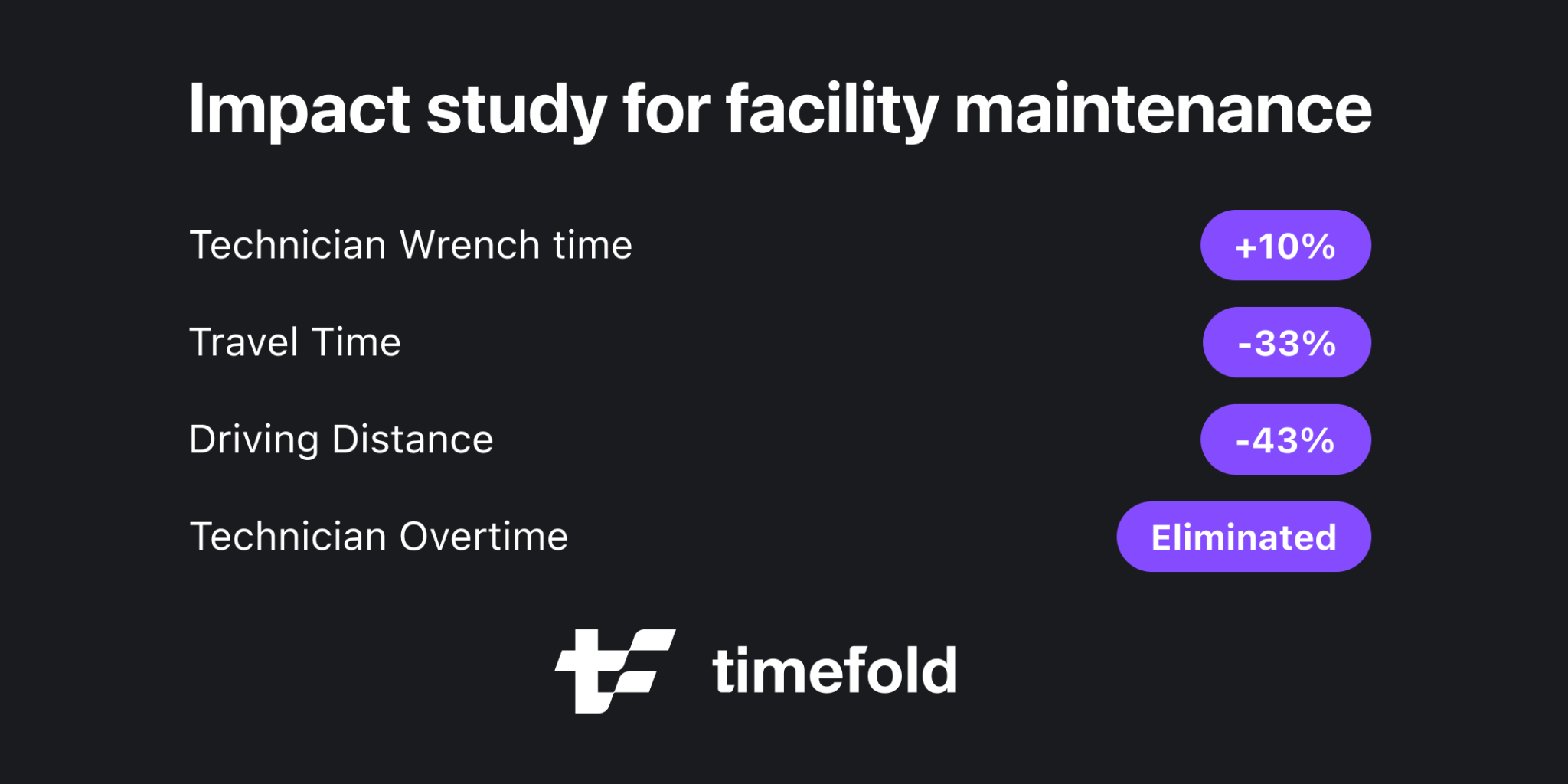
CBRE is the world’s largest commercial real estate and facilities management firm, coordinating more than 60 million work orders across 90 countries. The company has now publicly shared what happened when it replaced manual dispatch with optimization. The results, presented at Field Service West, are striking:
- 10% increase in technician wrench time, the productive on-site portion of the working day, lifted from 62% to 72%.
- 33% reduction in travel time
- 43% reduction in drive distance, and the CO2 that comes with it
- Overtime eliminated in the pilot regions
CBRE is now rolling the platform out to more than 10,000 technicians.
Why manual dispatch was breakingCBRE’s facilities management division handles the operational reality of modern field service. Planned maintenance, reactive repairs, urgent P1 incidents, and SLA-bound client work all
compete for the same finite technician capacity. The workforce itself is fragmented across employed engineers, a 40,000-strong third-party vendor network, and client-side technicians.
Human planners, however skilled, can’t hold thousands of constraints in their heads while the day shifts under them. Skills, coverage zones, shift patterns, SLAs, and dedicated-technician rules are all in play simultaneously. The result was familiar to anyone running a service desk: 500+ visits in backlog, constant priority overrides, and schedule drift that compounded by lunchtime.
What changed with TimefoldCBRE deployed the Field Service Routing API, an AI optimization engine purpose-built for facility maintenance and field service. Rather than picking the next job for one technician, the model plans the entire workforce’s day at once, and re-plans it every 10 minutes as the world changes.
When an emergency comes in, a technician calls in sick, or a job overruns, the system absorbs the disruption automatically. Past activities are pinned, and the rest of the day rebalances. Skills, coverage areas, SLA deadlines, dedicated-technician rules, and shift constraints are all modeled as hard or soft constraints, not rules bolted on after the fact.
The implementation realityNumbers like these don’t come for free. CBRE has been candid about the three challenges any service business should expect.
- Data availability. Optimization needs structured information about schedules, skills, and start and stop locations. Many CMMS deployments don’t have this on day one.
- Data quality. Bad data produces bad schedules. Completeness and ongoing updates matter more than any algorithm.
- Trust. Dispatchers, understandably, distrust technology decisions they don’t understand. Showing why a choice was made, in other words explainability, is what earns adoption.
These are operational change problems, and they apply equally to a regional contractor and to a global FM operator.
What it means for the rest of the industryWhile CBRE’s results sit at the upper end of what field service optimization can deliver, they’re no exception. On average, we see a 25% reduction in travel time. Because the underlying mechanics aren’t unique. Any operation juggling skills, geography, urgency, and customer SLAs is leaking hours of productive capacity into vans and admin every week.
If you run field service or facilities maintenance and want to see what’s possible for your team, explore the route optimization use case for facility maintenance, try the Field Service Routing model, or learn more at timefold.ai.