)
)
The Complete Guide to Bespoke Air Handling Unit Design
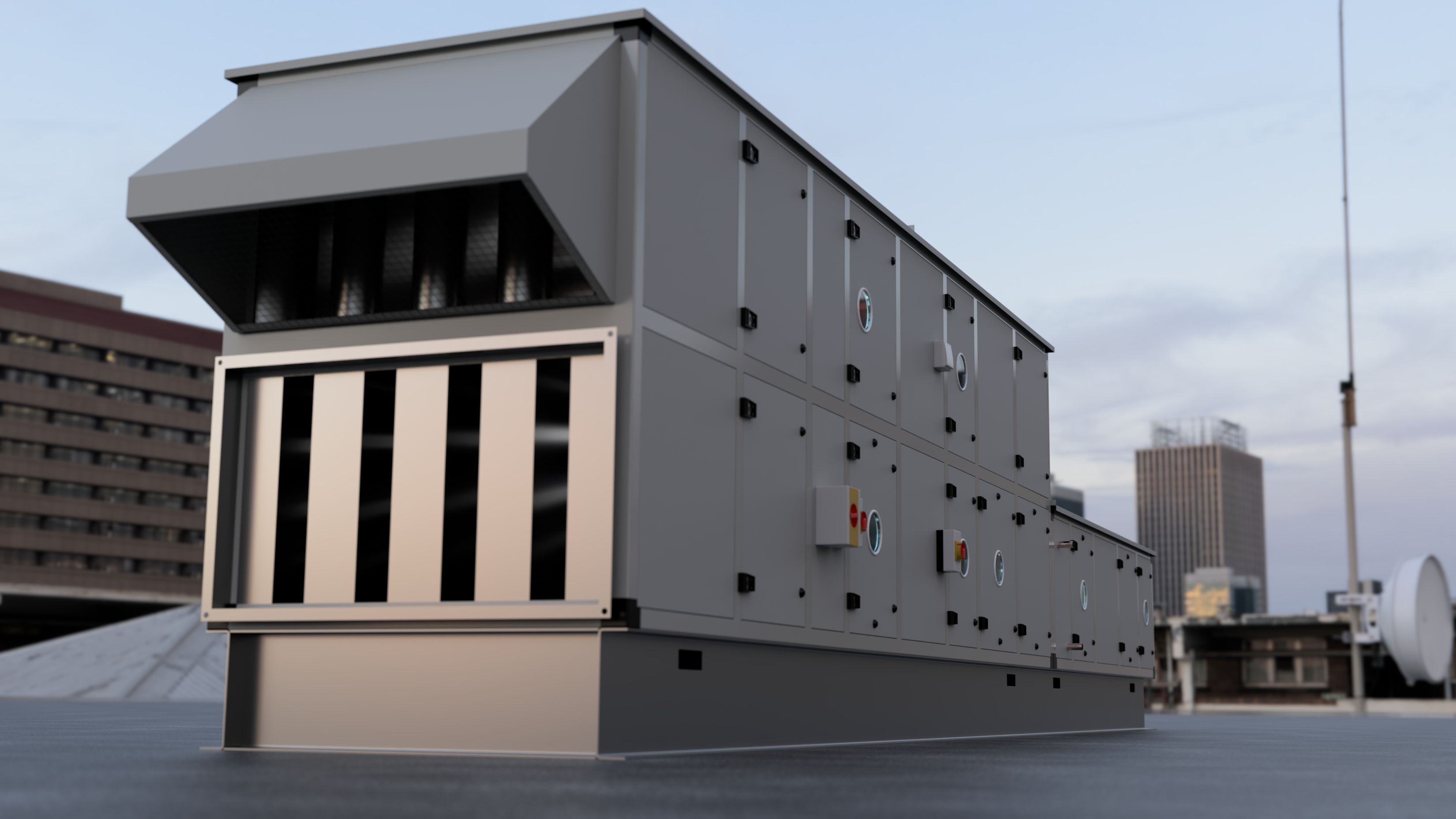
When standard air handling units don’t meet your facility’s requirements, bespoke design becomes essential.
Whether you’re managing a hospital with stringent ventilation standards, a pharmaceutical facility requiring precise environmental control, or a leisure centre dealing with corrosive pool atmospheres, off-the-shelf solutions often fall short.
Bespoke air handling units are custom-engineered systems designed specifically for your application. Rather than adapting your requirements to fit a manufacturer’s standard range, bespoke design starts with your exact needs and builds the solution around them.
This comprehensive guide explains when bespoke air handling units make sense, how the design process works, what factors influence performance, and how to ensure you get a system that delivers long-term value.
Understanding Bespoke Air Handling Units
An air handling unit (AHU) conditions and circulates air throughout a building. Standard units come in predetermined sizes and configurations, suitable for typical commercial applications. Bespoke units are custom-designed and manufactured to meet specific requirements that standard products cannot address.
The distinction matters because facilities with unusual dimensions, extreme performance requirements, specific compliance needs, or harsh operating environments cannot achieve optimal results with standard equipment. Bespoke design allows every component to be specified for your exact application.
Bespoke doesn’t necessarily mean expensive. While custom engineering involves design costs, the result is often more cost-effective long-term because the system performs exactly as required without over-specification or compromise. You pay for what you need, not for unnecessary features or multiple standard units where one bespoke system would suffice.
When Bespoke Design Makes Sense
Several situations make bespoke air handling units the logical choice over standard alternatives.
Space Constraints
Buildings with unusual layouts, restricted plant room dimensions, or difficult access routes often cannot accommodate standard AHU sizes. Bespoke design allows units to be configured to fit available space, whether that means unusual proportions, angled sections, or split configurations that can be assembled on-site.
Historical buildings present particular challenges. You cannot always modify the building to suit standard equipment, so the equipment must adapt to the building. Bespoke units can be designed to fit through doorways, navigate staircases, or occupy awkward spaces that would otherwise be unusable.
Extreme Performance Requirements
When you need exceptional performance in filtration, temperature control, humidity management, or air change rates, standard units may not deliver. Pharmaceutical clean rooms, laboratory environments, and precision manufacturing all demand performance levels beyond typical commercial specifications.
Bespoke design allows optimisation for your specific performance criteria. If you need HEPA filtration with minimal pressure drop, precise humidity control to ±2%, or the capacity to handle extreme outdoor air percentages, custom engineering ensures every component works together to achieve these targets.
Compliance Requirements
Healthcare facilities must comply with HTM 03-01 guidelines, pharmaceutical facilities with GMP requirements, and food processing with relevant hygiene standards. These regulations often specify design features or performance characteristics that standard units don’t provide.
Bespoke design builds compliance into the system from the start. Rather than retrofitting additional components or accepting that certain requirements cannot be met, custom engineering ensures the complete system meets all applicable standards.
Harsh Operating Environments
Facilities exposed to corrosive atmospheres, extreme temperatures, high dust loads, or other challenging conditions require AHUs built to withstand these environments. Standard units designed for benign commercial applications will fail prematurely under harsh conditions.
Bespoke design allows appropriate material selection, protective coatings, reinforced construction, and component specifications suited to the operating environment. The investment in custom engineering is recovered through extended equipment life and reduced maintenance costs.
Integration Requirements
Complex building management systems, specific control strategies, or integration with existing equipment may require custom control panels, unusual electrical specifications, or non-standard communication protocols. Bespoke design accommodates these requirements rather than forcing compromise.
Key Components of Bespoke AHU Design
Effective bespoke air handling unit design considers every element that influences performance, reliability, and operational costs.
Casing Design and Construction
The AHU casing must provide structural integrity, thermal performance, and access for maintenance. Bespoke design allows casing thickness, insulation specifications, and panel construction to be optimised for your application.
Thermal bridging creates condensation risk and energy losses. Quality bespoke units use thermally broken construction with continuous insulation to eliminate cold bridges. Panel thickness can be specified to achieve required thermal performance without excessive weight or cost.
Access requirements vary by application. Maintenance personnel need safe access to filters, coils, and mechanical components. Bespoke design positions access doors logically, provides adequate working space, and incorporates features like removable panels or hinged sections where full access is required.
Air Filtration
Filtration requirements depend on outdoor air quality, process requirements, and occupant sensitivity. Bespoke design allows filter stages, efficiencies, and sizes to be selected for optimal performance.
Multi-stage filtration typically uses coarse pre-filters to protect fine filters, extending their life and reducing operating costs. The number of stages, filter grades, and physical dimensions can all be optimised in bespoke design.
Filter access must be practical for routine replacement. Bespoke units position filters for easy access, provide adequate space for filter changes, and can incorporate features like bag-in/bag-out containment for hazardous applications.
Heating and Cooling Coils
Coil selection influences capacity, efficiency, and maintenance requirements. Bespoke design specifies coil rows, fin spacing, tube material, and circuitry for your exact heating and cooling loads.
LTHW (low-temperature hot water), steam, electric, or gas heating can be selected based on available utilities and control requirements. Cooling coils can use chilled water or direct expansion refrigerant, with configurations optimised for dehumidification or sensible cooling as required.
Coil face velocity affects pressure drop and performance. Bespoke design can use larger coil faces to reduce velocity, improving efficiency and reducing operating costs. Corrosion resistance can be enhanced through copper-nickel tubes, epoxy coatings, or stainless steel construction.
Fan Selection and Configuration
Fan performance must deliver required airflow at system static pressure while minimising noise and energy consumption. Bespoke design selects fan type, size, and drive configuration for optimal efficiency.
Backward-curved centrifugal fans offer the best efficiency for most applications. Direct-driven fans eliminate belt maintenance but limit flexibility. Belt-driven fans allow speed adjustment through sheave changes and isolate motor vibration from the fan.
Variable speed drives provide precise airflow control and significant energy savings in applications with variable loads. Bespoke design can specify appropriate VFD features, control integration, and motor protection.
Acoustic treatment may include fan inlet silencers, discharge silencers, or acoustic lining. Bespoke design positions these elements for maximum effectiveness without excessive pressure drop.
Heat Recovery
Heat recovery reduces energy costs by transferring heat between exhaust and supply air streams. The appropriate recovery technology depends on application requirements and climate.
Plate heat exchangers offer good efficiency with no moving parts and minimal maintenance. Thermal wheels provide higher efficiency and can transfer moisture, beneficial in some applications. Run-around coil systems allow supply and exhaust ducts to be in different locations.
Bespoke design optimises heat recovery for your specific load profile, climate, and operating patterns. Face velocity, effectiveness, and bypass arrangements can all be specified to maximise energy savings while maintaining required performance.
Controls Integration
Modern building management systems require sophisticated integration between AHUs and other building systems. Bespoke design provides control panels with appropriate communication protocols, sensor interfaces, and control strategies.
Standard control points include supply air temperature, fan status, filter pressure drop, and alarm conditions. Advanced applications may require humidity control, economiser management, demand-controlled ventilation, or integration with laboratory pressure controls.
Bespoke control panels can incorporate specific control logic, safety interlocks, and monitoring functions that standard panels don’t provide. This ensures the complete system operates as intended without field modifications or workarounds.
The Bespoke Design Process
Specifying bespoke air handling units involves several stages that ensure the final system meets all requirements.
Requirements Definition
The process begins with comprehensive requirements definition. This includes airflow rates, filtration standards, temperature and humidity targets, available utilities, space constraints, acoustic limits, and any regulatory requirements.
Thorough requirements definition prevents costly changes later. It’s worth investing time upfront to consider future needs, expansion possibilities, and maintenance access.
Psychrometric Analysis
Psychrometric calculations determine heating and cooling loads, dehumidification requirements, and optimal control strategies. This analysis considers outdoor design conditions, internal loads, occupancy patterns, and process requirements.
Accurate psychrometric analysis ensures the system can maintain required conditions under all operating scenarios. Bespoke design can account for unusual load profiles or extreme conditions that standard selections cannot address.
Component Selection
With loads established, appropriate components can be selected. This involves choosing filter types and stages, sizing heating and cooling coils, selecting fans for efficient operation, and specifying heat recovery if applicable.
Component selection balances performance, efficiency, cost, and maintainability. Bespoke design allows optimisation across these factors rather than accepting the compromises inherent in standard units.
Arrangement Design
Physical arrangement determines how components fit together, where maintenance access is located, and how the unit occupies available space. Bespoke design creates arrangements that work with building constraints while maintaining accessibility.
3D modeling helps identify potential issues before fabrication. Clash detection ensures ductwork, piping, and other services can connect as required. Access can be verified to ensure filter changes and coil cleaning are practical.
Performance Verification
Before fabrication, performance should be verified through calculations and simulation. This confirms that the designed system will meet specified conditions under full load, part load, and any extreme scenarios.
HVAC simulation software can model annual energy consumption, helping justify any premium for high-efficiency components. Life-cycle cost analysis may show that higher initial investment delivers savings through reduced operating costs.
Factory Testing
Quality manufacturers test bespoke units before dispatch. Testing verifies fan performance, leak testing confirms casing integrity, and control functions are checked. This identifies any issues that can be corrected before site installation.
Witnessed testing allows client representatives to observe performance verification. This provides confidence that the system will perform as specified and allows any concerns to be addressed before the unit leaves the factory.
Industry-Specific Bespoke Applications
Different industries have unique requirements that make bespoke air handling units particularly valuable.
Healthcare Facilities
Hospitals require ventilation systems that maintain specific pressure relationships between areas, deliver multiple air changes per hour, and provide high-efficiency filtration. HTM 03-01 compliance mandates various design features that standard units rarely incorporate.
Bespoke healthcare AHUs include features like dual fan arrangements for redundancy, HEPA filtration for critical areas, and controls that maintain precise pressure differentials. Casing construction must minimise contamination risk through fully welded internal seams and smooth surfaces that don’t harbour bacteria.
Operating theatres have the most stringent requirements, with 25-30 air changes per hour, HEPA filtration, and precise temperature and humidity control. Bespoke design ensures these demanding specifications are met reliably.
Pharmaceutical Manufacturing
Pharmaceutical facilities manufacturing sterile products require clean room environments meeting GMP standards. Air handling units must deliver high-efficiency filtration, precise environmental control, and validation capability.
Bespoke pharmaceutical AHUs use materials compatible with cleaning and disinfection, incorporate features that facilitate validation, and provide the documentation required for regulatory compliance. HEPA filters may be supplied with test certificates, and control systems must demonstrate that environmental parameters remain within specification.
Clean room classifications from ISO 5 to ISO 8 demand progressively higher air change rates and filtration efficiency. Bespoke design sizes systems appropriately for the required classification while optimising energy efficiency.
Leisure Centres and High-Chlorine Environments
Leisure facilities with swimming pools present unique challenges that demand specialist air handling solutions. The high chlorine content in pool hall air is highly corrosive to standard AHU components, requiring specific material selections and protective coatings.
We design bespoke air handling units for leisure centres using corrosion-resistant materials including marine-grade stainless steel, epoxy-coated components, and chlorine-resistant gaskets. Our systems incorporate enhanced condensate drainage to manage the high humidity levels typical in pool environments, preventing water accumulation that can accelerate corrosion.
Temperature and humidity control is critical in these applications. Our leisure centre AHUs maintain comfortable conditions for swimmers and spectators while managing the moisture load from the pool surface. We integrate heat recovery systems to improve energy efficiency – crucial given the high air change rates required in pool halls.
The combination of corrosive atmosphere, high humidity, and demanding performance requirements makes off-the-shelf units unsuitable for serious leisure applications. Bespoke design ensures longevity, reliability, and lower whole-life costs compared to repeatedly replacing standard equipment damaged by chlorine exposure.
Food Processing
Food manufacturing facilities must comply with hygiene regulations while maintaining environmental conditions that prevent condensation, control temperature, and manage humidity. Air handling units in these environments require washable surfaces, appropriate drainage, and construction that prevents contamination.
Bespoke food industry AHUs use stainless steel construction, have sloped bases for drainage, and incorporate features like removable panels for cleaning. Filtration prevents airborne contamination while avoiding excessive pressure drop that would increase energy costs.
Laboratories
Research laboratories often have highly specific ventilation requirements for safety, experiment integrity, or equipment protection. Fume cupboards, biological safety cabinets, and controlled environment rooms all impose demands on air handling systems.
Bespoke laboratory AHUs provide the precise control, redundancy, and monitoring required for critical research environments. Systems may need to maintain specific room pressures, deliver 100% outdoor air with no recirculation, or provide backup capacity for safety-critical applications.
Specifying Bespoke Air Handling Units
Effective specifications ensure you receive a system that meets requirements without ambiguity or compromise.
Performance Specifications
Clearly state required airflow, external static pressure, supply air conditions, filtration efficiency, acoustic performance, and energy efficiency targets. Include design outdoor conditions and internal loads.
Specify whether performance figures are based on sea level or site altitude, as this affects fan selection. State acceptable tolerances – for example, airflow within ±5% of nominal.
Construction Standards
Specify casing construction standards, insulation thermal performance, air leakage class, and structural deflection limits. Reference relevant standards like Eurovent or ASHRAE where applicable.
Material specifications should address corrosion resistance, thermal performance, and maintenance durability. State whether food-grade stainless steel, marine-grade aluminum, or other special materials are required.
Component Requirements
Specify filter types and minimum efficiency, coil construction and circuitry, fan type and efficiency class, and heat recovery technology if required. Include control requirements and integration needs.
For critical applications, specify redundancy arrangements. This might include dual fans, automatic changeover on failure, or backup heating/cooling capacity.
Testing and Documentation
Specify factory testing requirements including fan performance verification, casing leak testing, and control function checks. State what documentation is required – technical submittals, operation and maintenance manuals, and as-built drawings.
For regulated industries, specify validation documentation, material certificates, and compliance statements that will be required for regulatory approval.
Cost Considerations
Bespoke air handling units involve different cost considerations than standard equipment.
Initial Investment
Custom engineering and one-off fabrication mean higher initial costs than standard units. However, the premium is often smaller than expected when a single bespoke unit replaces multiple standard units or eliminates costly site modifications.
Competitive tendering helps control costs. Providing detailed specifications allows fair comparison between suppliers and ensures you receive value for money.
Operating Costs
Bespoke design can significantly reduce operating costs through optimised efficiency, appropriate sizing, and features that reduce maintenance. Energy savings alone may justify the initial premium within a few years.
Variable speed drives, efficient fans, and well-designed heat recovery all reduce energy consumption. These features should be evaluated on life-cycle cost, not just initial price.
Maintenance Costs
Easy maintenance access, standard replacement components where appropriate, and robust construction reduce maintenance costs over equipment life. These benefits accumulate over 15-20 years of operation.
Consider specifying common filter sizes even in bespoke units, as this improves availability and reduces costs. Non-standard sizes can be expensive and may have longer lead times.
Quality Indicators
When selecting a bespoke AHU manufacturer, several factors indicate quality and capability.
Engineering Capability
Quality manufacturers employ qualified engineers who understand psychrometrics, thermodynamics, and fluid mechanics. They should demonstrate capability through detailed calculations, 3D modeling, and performance verification.
Ask about design software and analytical tools. Advanced manufacturers use CFD analysis for critical applications, ensuring airflow distribution and component performance meet requirements.
Manufacturing Standards
ISO 9001 quality management certification indicates systematic quality control. Factory visits allow assessment of manufacturing capabilities, quality control processes, and workforce skills.
Welding qualifications, pressure testing equipment, and quality inspection procedures all indicate manufacturing capability. Quality manufacturers document these processes and maintain records.
Project Experience
Experience with similar applications demonstrates understanding of specific requirements. Ask for references from comparable projects and verify performance outcomes.
Industry-specific accreditations provide assurance of capability. For example, healthcare projects may require contractors approved under NHS frameworks.
Support Services
Comprehensive support through commissioning, operation training, and ongoing maintenance indicates commitment to long-term performance. Quality manufacturers provide detailed documentation and responsive technical support.
Spare parts availability matters over equipment life. Manufacturers who stock common wear items and can supply special components promptly reduce downtime risks.
Working with I-Flow Technologies
At I-Flow Technologies, bespoke air handling unit design is our core expertise. We’ve delivered custom-engineered systems across healthcare, pharmaceutical, leisure, food processing, and industrial applications throughout the UK.
Our design process begins with thorough understanding of your requirements through site surveys and detailed consultation. We create systems optimised for your specific application rather than adapting standard products.
Our engineering team uses advanced modeling and simulation to verify performance before fabrication. Every unit undergoes factory testing with the option for witnessed testing by your representatives.
We provide comprehensive commissioning support, operation training, and ongoing maintenance services to ensure your investment delivers long-term value. Our systems are designed for accessibility, making routine maintenance straightforward and minimising downtime.
When your facility requires air handling performance that standard units cannot deliver, bespoke design provides the solution. Contact I-Flow Technologies to discuss your specific requirements and discover how custom-engineered air handling units can meet your needs precisely.